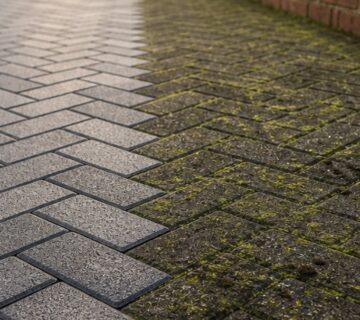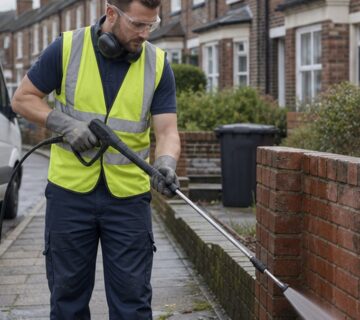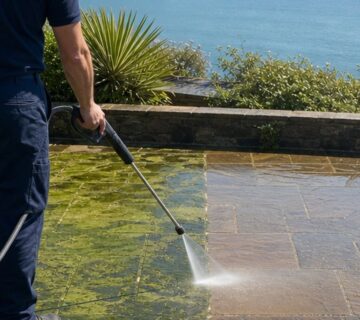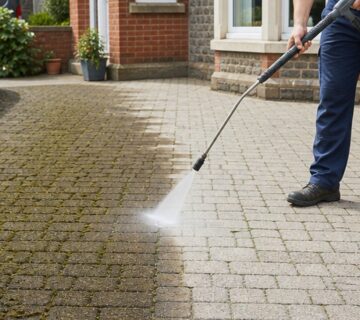

Green stains creeping across a roof, dark streaks running down render, a driveway that’s gone slippery after every bit of rain. Moss and algae removal is one of the most common calls we get at Swansea Jet Washing, and it’s also one of the most misunderstood jobs in exterior cleaning. Most people assume the fix is simple: point a pressure washer at it and blast it away. In reality, that approach usually does more harm than good, which is exactly why professional soft washing has become the standard for dealing with organic growth safely and effectively.
Why moss and algae take hold in the first place
Moss, algae and lichen thrive wherever there’s moisture, shade and a rough surface to cling to. Swansea’s damp climate, combined with plenty of tree cover and north-facing walls that rarely see direct sun, creates near-perfect conditions for growth. Roof tiles, render, timber cladding, decking and even conservatory roofs are all common targets.
The problem isn’t just cosmetic. Left untreated, moss holds water against a surface for long periods, which can lead to frost damage, cracked render, blocked guttering and, on roofs, lifted or damaged tiles. Algae leaves a slippery film that becomes a genuine slip hazard on paths, decking and patio areas. What starts as a patch of green in one corner of the roof can spread across an entire elevation within a season or two if it’s left alone.
Why pressure alone isn’t the answer
A lot of homeowners reach for a domestic pressure washer, or call in a firm that only offers high-pressure jet washing, thinking more power means a better result. On hard surfaces like block paving or concrete, that’s often true. On the surfaces where moss and algae actually grow, it’s a different story.
High pressure strips away the top layer of a surface rather than treating the growth underneath. On roof tiles, that means losing the protective granules or coating that keeps water out. On render, it can force water behind the surface and cause cracking. On timber, it roughens the grain and speeds up future decay. Worse still, blasting moss without treating the root simply spreads spores across the surface and into gutters, which means the growth often returns within months, sometimes worse than before.
How professional soft washing gets to the root of the problem
Soft washing takes a different approach entirely. Rather than relying on pressure to do the work, it uses low-pressure water combined with specialist, biodegradable treatments designed to break down moss, algae and lichen at a biological level. The solution is applied evenly across the surface and left to work, penetrating the root structure of the growth rather than just rinsing the surface clean.
Because the pressure is kept low, soft washing is safe for the delicate surfaces that pressure washing damages: roof tiles and slate, render and painted finishes, timber cladding, uPVC fascias and guttering, and glass structures like conservatories. It removes the growth thoroughly, protects the material underneath, and slows down how quickly moss and algae come back. For most properties, that means results that last considerably longer than a quick pressure wash ever could.
There’s also a safety argument for leaving this to a professional. Roofs and upper elevations covered in wet moss are extremely slippery, and getting the treatment strength and dwell time right takes experience. Too weak, and the growth isn’t fully killed. Too strong or applied incorrectly, and it can damage paintwork, plants or surrounding surfaces. Professional soft washing brings the right equipment, the right chemical balance and the right technique together, which is a difficult combination to get right with a garden hose and a bottle from the local hardware shop.
Common areas that benefit from soft washing
- Roof tiles and slate, where moss lifts tiles and traps moisture
- Render and painted walls, prone to green and black staining
- Timber cladding and decking, which roughens and rots faster once algae takes hold
- uPVC guttering, fascias and soffits, which discolour over time
- Conservatory roofs and glass structures, where algae builds up quickly in shaded corners
If more than one of these applies to your property, it’s usually worth having them treated together rather than tackling one area and leaving the rest to keep spreading.
What to expect from a professional soft wash
A proper soft washing visit starts with an assessment of the affected surfaces to work out the right treatment for the material involved. The biodegradable solution is then applied at low pressure, left to dwell and break down the growth, and rinsed where needed. There’s minimal mess, no risk to surrounding plants when handled properly, and no damage to the surface itself. Many customers are surprised by how much brighter render and roofing look once years of built-up growth have been lifted away, without a single high-pressure pass anywhere near the property.
Frequently asked questions
Does soft washing kill moss completely, or just remove the visible growth?
Soft washing treatments are designed to break down moss and algae at the root, not just rinse away what’s visible on the surface, which is why the results last considerably longer than pressure washing alone.
Is soft washing safe for plants and pets?
The treatments used are biodegradable and applied carefully, with surrounding plants protected or rinsed where necessary, so it’s a safe option for gardens and outdoor spaces.
How often does a roof or render need soft washing?
This depends on the property’s exposure to shade and moisture, but many customers find that treated surfaces stay clean for a good while longer than after a standard pressure wash, reducing how often the job needs repeating.
Can soft washing be used on all exterior surfaces?
It’s best suited to delicate materials such as roof tiles, render, timber and uPVC. Harder surfaces like block paving and concrete are generally better suited to high-pressure jet washing instead.
Will soft washing damage my roof tiles or render?
No. Because it relies on low pressure and targeted treatment rather than force, soft washing is specifically designed to protect delicate surfaces while still removing stubborn organic growth.
If moss or algae is starting to spread across your roof, render, decking or driveway, it’s worth having it treated properly before it causes lasting damage. Get in touch with the team at Swansea Jet Washing on 07494 128 215 or info@swanseajetwashing.com, or get in touch through our contact page to arrange a soft washing visit.