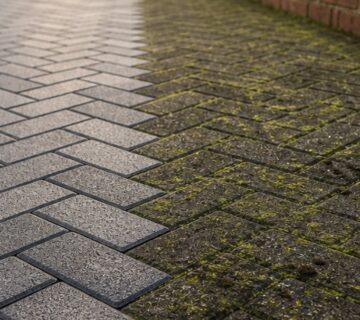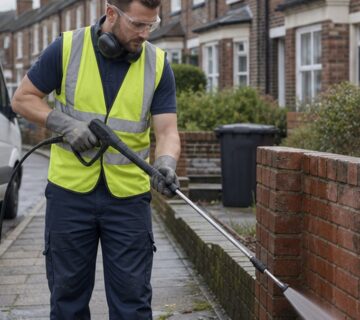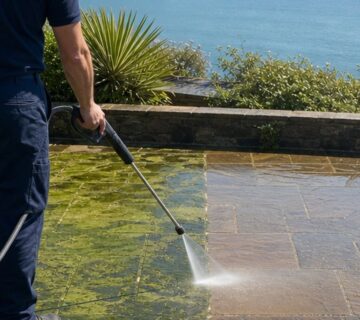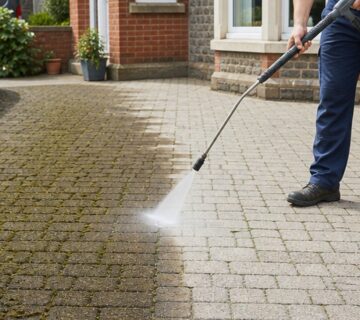
Block paving needs professional jet washing because dirt, moss, algae and weeds do more than spoil its look. Over time, they make the surface slippery, weaken the sand between the blocks, and can leave stains that are harder to remove. For homes and businesses in Swansea, block paving jet washing is a practical way to keep driveways, paths and forecourts clean, safer and in better condition.
Why block paving gets dirty so quickly
Block paving is strong, but it is also full of small joints, gaps and surface texture. These spaces collect soil, dust, leaf matter and grit. Once that build-up settles in, it gives moss, algae and weeds a place to grow.
In Swansea and across South Wales, the wet climate plays a big part. Regular rain, shade and damp air create ideal conditions for green growth. Driveways under trees, shaded paths and north-facing areas often suffer most.
Block paving can also stain from everyday use. Vehicles can leave oil marks, tyres can leave dark patches, and fallen leaves can mark the surface. On commercial forecourts, foot traffic and vehicle movement can make this build-up happen faster.
A light rinse may improve the surface for a short time. But it rarely removes the growth and grime held deep in the joints and textured face of the blocks.
Moss, algae and weeds are more than a cosmetic issue
It is easy to see moss or algae as a visual problem only. In reality, organic growth can affect how your paving performs.
Moss holds moisture against the surface. Algae forms a slick layer, especially in damp or shaded areas. Weeds send roots into the joints and disturb the sand between the blocks. As this continues, the paving can start to lose the firm, neat finish it had when first laid.
The jointing sand between block paving is important. It helps lock the blocks together and keeps them stable. When dirt, weeds and water break this sand down, blocks may begin to move, dip or spread.
This does not always happen overnight. It often starts with small signs, such as loose sand, widening joints or a few uneven blocks. If left alone, the problem can become harder to manage.
Slip hazards on driveways, paths and forecourts
Moss and algae can make block paving slippery, particularly after rain. This matters on any outdoor surface, but it is especially important on driveways, paths, steps and commercial forecourts.
At home, a slippery driveway or path can increase the risk of trips and falls. This can affect children, older relatives, visitors and delivery drivers. A surface may look safe when dry, then become slick as soon as the weather changes.
For commercial sites, clean paving also supports a safer environment for staff, customers and visitors. Busy entrances and forecourts need clear, reliable surfaces. Regular cleaning helps reduce slip risk and shows that the property is being well cared for.
Professional cleaning will not remove every outdoor risk. But it can remove the layers of algae, moss and grime that make block paving more hazardous in wet weather.
Kerb appeal and first impressions
Your driveway or paved entrance is one of the first things people notice. Clean block paving gives a property a sharper, better maintained look. Dirty or stained paving can make an otherwise tidy home or business look neglected.
For homeowners, this can improve day-to-day kerb appeal. It can also help if you plan to sell or let the property. A clean driveway creates a strong first impression before anyone reaches the front door.
For businesses, the same principle applies. Customers often judge a site before they step inside. Clean paving, walls and forecourts help present a professional image.
Block paving is a feature, not just a hard surface. When it is cleaned well, the colour and pattern of the blocks stand out again.
Why DIY pressure washing often goes wrong
Many people try to clean block paving with a domestic pressure washer. Sometimes this helps at first glance. But it can also cause damage if the wrong pressure, nozzle or angle is used.
Too much pressure can blast out jointing sand. This leaves gaps between the blocks and makes the surface less stable. A narrow jet can also cut lines into softer blocks or leave uneven cleaning marks.
DIY cleaning can also push dirt around rather than remove it fully. In some cases, it drives grime deeper into the joints or spreads dirty water across clean sections. This can leave the paving patchy once it dries.
Common DIY issues include:
- Holding the nozzle too close to the blocks
- Using a jet that is too narrow or harsh
- Cleaning in random directions, which leaves streaks
- Failing to clear loose debris before washing
- Not replacing lost jointing sand afterwards
Domestic machines also have limits. They may not offer the same control, flow rate or cleaning power as professional equipment. This can lead to slower work and less even results.
What professional block paving jet washing involves
Professional cleaning is not just about using more power. It is about using the right pressure, method and aftercare for the surface.
At Swansea Jet Washing, professional jet washing can be used on block paving, concrete, tarmac, patios, brick walls and commercial forecourts. The aim is to clean thoroughly while protecting the surface and the joints.
A careful process may include:
- Inspecting the paving for loose blocks, heavy staining and drainage points
- Clearing loose dirt, leaves and debris before washing
- Choosing the correct pressure and nozzle for the surface
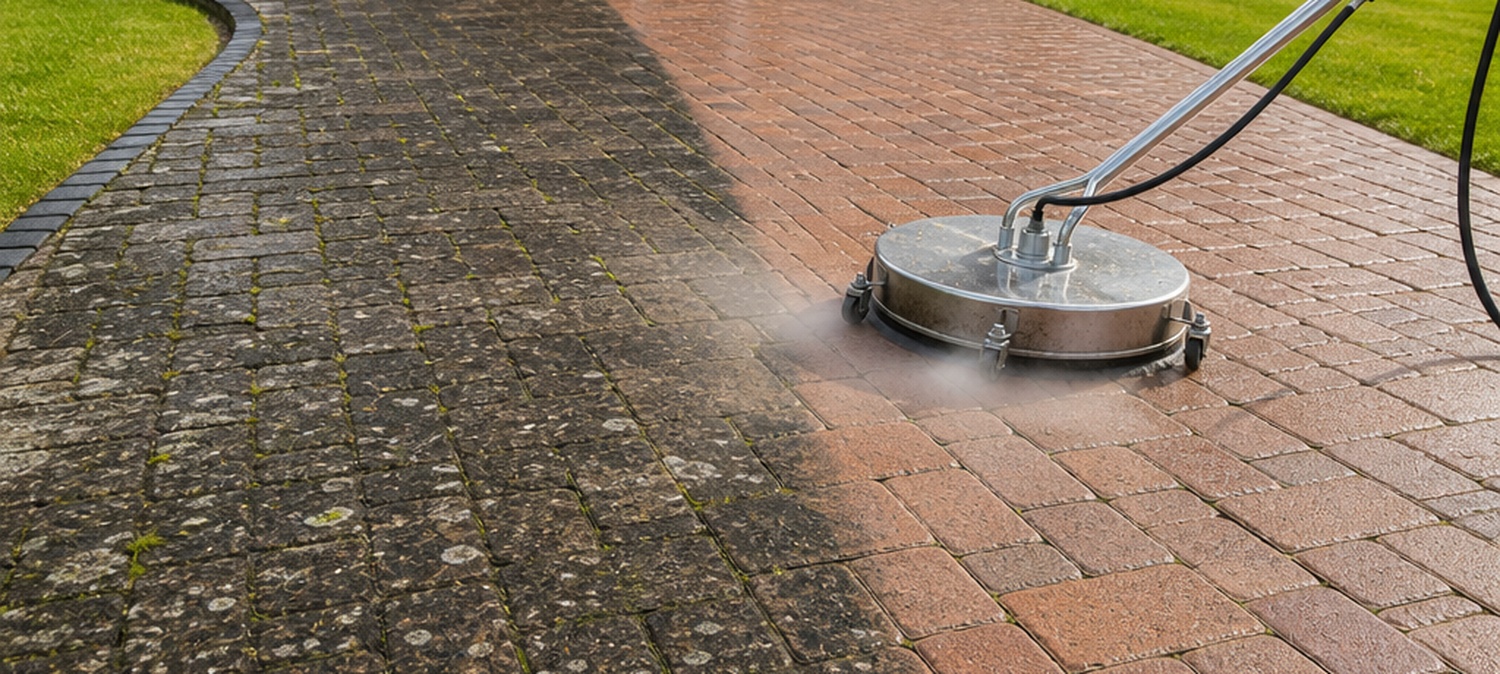
- Working in a controlled sweep pattern for an even finish
- Washing from the right direction to manage dirty water run-off
- Re-sanding the joints after the paving has dried where needed
The sweep pattern matters. It helps avoid lines, patches and missed sections. It also gives a more consistent clean across the full area.
The pressure setting matters too. Professional equipment allows better control than many domestic machines. The operator can adjust the method to suit the paving, the age of the blocks and the level of build-up.
Why re-sanding the joints matters
After block paving has been cleaned, the joints often need fresh kiln-dried sand brushed back in. This is a key step and should not be skipped.
Jet washing removes dirt, moss and old loose material from the joints. That is part of the cleaning process. But once those gaps are clear, they need to be filled again so the blocks remain locked in place.
Re-sanding helps support the paving, reduce block movement and slow weed growth. It also helps restore a neat, finished look. Without it, the paving may look clean but become less stable over time.
This is one reason professional care makes a difference. A proper clean should look good on the day and support the surface for longer.
When soft washing or steam cleaning may be more suitable
Not every outdoor surface needs high-pressure cleaning. Some materials need a gentler approach, especially if they are older, delicate or easily marked.
For areas affected by organic growth, soft washing uses low-pressure treatment to help remove moss, algae and similar build-up from more delicate surfaces. This can be useful for roofs, render, certain walls and other sensitive areas.
Steam pressure cleaning may also suit some jobs. Superheated steam can help with stubborn stains and sensitive masonry where care is needed.
A professional exterior cleaning company can assess the surface first. This helps choose the right method rather than using one approach for every job.
How often should block paving be cleaned?
The right cleaning schedule depends on the site. A shaded driveway near trees may need attention more often than an open, sunny area. A commercial forecourt with regular traffic may also need more frequent cleaning than a quiet garden path.
As a general guide, watch for early signs of build-up rather than waiting until the paving is heavily stained. Green patches, slippery areas, weeds in the joints and dull colour all show that cleaning may be due.
Regular care can make each clean more effective. It can also help reduce long-term wear and keep the paving looking its best through the seasons.
Choose professional block paving cleaning in Swansea
Block paving is built to last, but it still needs the right care. Professional jet washing removes dirt, moss, algae and staining more effectively than a quick DIY clean. It also helps protect the jointing sand, improve safety and restore the appearance of your property.
Swansea Jet Washing serves residential and commercial customers across Swansea and South Wales. Based at Windsor Street, Uplands, Swansea SA2 0LN, the team provides professional exterior cleaning with a focus on quality results, safe working and responsible methods.
If your driveway, path, patio or forecourt is looking tired, slippery or stained, get in touch for a free, no-obligation quotation. You can also call 07494 128 215 or email info@swanseajetwashing.com to discuss your block paving cleaning needs.